Showing posts with label Anxiety. Show all posts

Wednesday, May 20, 2020

Some Thoughts on Suicide and Suicide Prevention While the World is in Isolation

"No Escape".jpg
"No Escape" by Judith Carlin
It's been a long while since I've posted. It's a great time to dust off this blog and apologize to my readers for my absence. Me culpa.

I'm writing this in May of 2020, a time of unprecedented social isolation. People the world over are staying home, missing work and doing their very best to stop the spread of Covid-19, a deadly virus that is causing a global pandemic. The vast majority of us are safe from disastrous infections, but we're not wrong to be scared. We're not wrong to isolate and distance ourselves from others to protect loved ones and ourselves. However, it's doing a number on our mental health.

The extent of psychological symptoms caused by widespread isolation due to the current pandemic is unclear. We'll probably never know how many people have suffered and how. Nonetheless, I know personally that it's difficult at best to isolate when you have existing mental health conditions, so I know it's the same for many of you. My hope is that you're all coping well, using helpful skills and socializing from a distance to keep in practice. I know that even at the best of times, though, some of us are not coping well. Some of us, especially when we're isolated, think about committing or even plan to commit suicide. Please don't.

I know this is a cliché. I'm going to say it anyway: Suicide is a permanent solution to a temporary problem. This is 100% true. Every. Single. Time. Unless you die some other way before you see your way out of the darkness, the state you are in will not last the rest of your life. So, don't burn down the whole forest to get rid of the poison ivy.

I'm here to tell you my cure for suicidal ideation, at least the thing that's worked best for me. It's not necessarily a permanent solution, and it is definitely bitter medicine, but it works. The way to see an end to your suffering without an end to your life is to wait. Just wait. Time is my cure.

Now, before you cuss me out, let me explain myself. I know how hard it is to endure the pain that brings you to want to kill yourself. I'm intimately familiar with that pain. I don't know any way to immediately ease that suffering. I'm sorry for that, but I do know it will stop if you wait long enough. Now, you may have to wait with a pal who watches over you or get a lot of help learning to live with your emotions while you wait, but the point is that you will endure. You only have to exist for now. You don't have to live your best life or any of that bullshit. You just have to be here now.

When we contemplate suicide, we often make the mistake of thinking we have a dire choice. We can either live like this for however long our painful life lasts or we can end it all now. That's not correct at all. The choice is between nothing and a life with some pain in it. Everyone's life has pain in it. It has other stuff too, like humor, love, kindness, thrills, entertainment, nature, animals, and so much more, I could never list it all. For me, missing all of that isn't worth giving in to the pain. I know sometimes it feels like none of the good things are in store for you, but they are. It also seems like you can never enjoy anything again, but you can. All you have to do is wait. I sincerely and wholeheartedly promise.

If you are suffering with suicidal thoughts or plan to commit suicide, stop. Go to Google. Type in any phrase with the term suicide. Google will kick back a help line for your area. Use it. Tell your family. Tell your friends. Tell your co-workers. I know you're afraid of being judged, but being judged is better than not having a chance. There will be people who don't understand. If they can't be taught to understand, fuck them. They're the problem, not you and your mental health. You can get better. They'll still be shitty. Reach out until someone reaches back and grabs your hand. Hold on tight and just live your life one breath at a time until the breathing gets easier. There's a world full of people, the vast majority of whom have had mental issues at some point in their lives. We're all just trying the best we can. That's all you have to do.

Best wishes and a big socially distant hug from me.

Saturday, July 14, 2018

Anxiety Isn't The Boss

Fear doesn't mean you have to stay still.
Sometimes, I'm sitting around watching television, hanging with family, doing chores, whatever, and I have something like a profound thought about my OCD and anxiety. Fine, it may not be profound, but it feels important to me. I had one such thought just now after using the bathroom, because I'm glamorous like that. The thought was this: My anxiety behaves so much better when I'm the boss. It's like a lap dog. If I don't give it proper discipline, it decides it makes the rules. When I don't let anxiety make decisions for me, it lessens naturally. Doing whatever the hell I want in spite of the horrible physical symptoms and emotions that crop up makes panic so much less intense.

(Disclaimer: I know I've said the same thing in different ways many times, but if you have OCD, you know sometimes you have to find new ways to think of the same ideas.)

What do I mean by doing whatever the hell I want in spite of my anxiety? I mean a few things. Firstly, if I'm working and I panic, I try hard not to stop to try to soothe myself. Soothing myself tells my brain something is actually wrong. Instead, I just keep working (sometimes). Another example is perhaps me excitedly planning to go to some event and then later dreading it because of anxiety. I know I actually want to go, so I do my best to do it anyway. I don't want to prove my anxiety right on any account. It rarely ever is, and it is never right about the severity of a damn thing. She's a drama queen, for real.

I know that self care is a much-touted aspect of mental health, but that doesn't mean self-care has to be a week off of work to collect yourself, thought it can mean that. For some people, like myself, stopping to savor the panic only makes it worse. If I "just keep swimming," as a wise fish once said, I tend to make out better. That's not to say I don't sometimes spend the day trying to distract myself from anxiety, but rather to say that the answer may lie in taking note of what you really want out of life when you're feeling well, so you can do it anyway when you're not.


Listen, if there's one thing, no matter how small, that you really want to do, but your anxiety is telling you is impossible–ignore your anxiety. Even if it makes you feel like you could shake out of your shoes and the world is falling in around you. Just do me a favor and achieve one thing that matters to you. Feel free to tell me how much of an ass I am in the comments if it doesn't go according to plan, but don't you dare forget to tell yourself that you're a badass for trying.

Be well, readers.

Wednesday, November 29, 2017

When It Feels Weird to Manage Your Life Well

When I'm going through periods of high anxiety in my life, the all-or-nothing, black-and-white thinking kicks in hard. If I can't cook dinner tonight, it means I'll never cook dinner again. If I'm not in the mood to write, I'll never write again. If my husband is disappointed we couldn't do something, he's disappointed in me and doesn't love me anymore. The list of ludicrousness goes on and on. I'm particularly adept at telling myself I can't have a normal life because I can't cope with it. Therefore, when I do cope with it, as I am now, it feels really weird.

I've been pretty certain that I'd be doomed this year. I was the host for Thanksgiving; my husband's family is visiting for Christmas; I've had lots of dental appointments for readjustments; my sister moved almost all the way across the country, and I've thrown a lot of social events for no other reason than to torment myself. Any one of these things can be torture when I'm very anxious, so I get a little anxious each time something pops up that this will be the one that sets me overboard again. Then, it doesn't happen. What am I supposed to do with that? It's like everything I think I know is wrong!

Well, that's anxiety. Everything you think you know that comes from a place of anxiety is either wrong or really over-exaggerated. That's like the definition. It's disarming because I can get used to not having anxiety attacks that are extra bad. Then, when they happen again, I'm all "I wasn't ready for this! Better be more vigilant (read: more anxious) in the future!" I've come to see this for the parody that it is. The self-fulfilling prophecy of stupidity. I hope my self-awareness can have some affect on my anxiety in the future, but I'm not holding out. Usually, my self-awareness is limited to the negative tendencies I have. That's probably not very helpful.

Luckily, I've learned to adapt. Instead of avoiding things just in case I get anxious, I've loaded up my agenda. I'm going to do all the things until such a time as I do get too anxious to do them again and have to start from the beginning. I get a lot more done that way, and you can too with my tried and true method of actually having a life! (Read that last bit in an enthusiastic Home Shopping Network voice). Anyway, here's to time well spent! I hope you're out there spending yours wisely, no matter what your brain tells you.

Hope you are all well or at least well enough.

Monday, July 31, 2017

5 Historic Figures Who Prove You Can Be Anxious and Still Do Important Things

Today, we're going to try to make ourselves feel better by learning about some of the illustrious people in history who've had anxiety disorders. Do you ever feel like you're unimportant? They probably did too and look at them now. They're starring in their very own obscure blog post. This could be you in 50 years, so chin up! If my satire isn't obvious enough, here's a sentence constructed solely to ensure you that I'm not minimizing your suffering. I'm just really bad at being funny. Okay? Let's go.

Abraham Lincoln


Abe Lincoln was a tremendous president and a nervous guy. He had a lot on his plate, like keeping an entire country together, and that would stress anybody out. However, his well-documented sadness and worry was more than just the stress of the job. He was more than likely clinically depressed and had an anxiety disorder. Even with these difficulties, he accomplished things that changed the course of American history.

President Lincoln's depression is much better documented than any anxiety he may have had. He was known to have "melancholy," and friends feared he would commit suicide on multiple occasions. He may have even anonymously published a poem about suicide called "The Suicide's Soliloquy." It's an extraordinarily morbid poem. It's also very beautifully written.

John Steinbeck


John Steinbeck is one of the greatest American authors in history. He penned novels set during the Great Depression and the Dust Bowl that forced landowning farmers to become impoverished migrant workers. His characters were simple, his settings rural and his stories unforgettable. The author of "The Grapes of Wrath" and "Of Mice and Men" wasn't a very happy man, in spite of his undeniable talent. He suffered from anxiety and depression.

According to the "Critical Companion to John Steinbeck," Steinbeck consulted a psychologist named Gertrudis Brenner for treatment of his depression. He survived his mental maladies and later died of heart disease, likely linked to a lifetime of smoking.

Charles Schulz


Do you know Charlie Brown and Snoopy? Then you've seen the cartoon work of Charles Schulz. This guy was the darling of comic strips for decades. To this day, we love his characters and the funny situations he put them in. From down-in-the-dumps Charlie to the bossy bully Lucy, he captured the good, the bad and the ugly sides of human nature through the lens of children.

Charles Schulz suffered from anxiety, as documented in several interviews during his lifetime. HIs wife once said that he dealt with his anxiety through acceptance. He tried to embrace his anxiety without bitterness, and this helped him cope with the tremendous stress of this illness. Radical acceptance is a tool even professionals use to help those with anxiety, so this guy was on the right track.

Emily Dickinson


Emily Dickinson, posthumous published poet and prolific pen pal, this 19th century figure hardly had access to a mental health clinic. However, her behavior during her life paints a clear picture of what she suffered mentally. She had a string of severe chest colds and later a bout of inflammation in her eye that kept her somewhat sickly for a time. Whether this contributed to her slow retreat from society is unknown, but we do know that she eventually confined herself to her house.

Dickinson would sometimes rush off when the doorbell rang. She spoke to visitors from behind doors at times. Her doctor, who would visit the home, even complained he couldn't examine her because she would stand outside the room. She kept up a healthy correspondence with her friends, but did not see them socially. It's easy to see that she was agoraphobic. Yes, her reclusiveness increased her artistic output (she wrote more than 1,000 poems). That doesn't mean that was her purpose in staying housebound.

Charles Darwin


Charles Darwin was the man who put the idea of natural selection on the map. Anyone with even a passing interest in biology or the theory of evolution knows who he is. Some of you may even know of his adventures aboard the H.M.S Beagle traveling the seas and documenting wildlife in places as far-flung as the Galapagos Islands. This voyage of five years, begun when he was in his early twenties, was to be his life's only grand adventure. He later become sickly, agitated and conflicted.

The cause of Charles Darwin's illness is a matter of debate. No one is really sure why this brilliant scientist got sick with problems like vomiting, heart palpitations and trembling, but we do know it was exacerbated when he took on too much work, which he did often. Leading theories include anxiety. He certainly worried obsessively about things like work and family. He frequently wrote about being nervous when he wasn't with his wife, which can easily be attributed to anxiety.

I'm going to stop here for two reasons. One, I don't want to bore you with a too-long list. Two, this list is seriously lacking diversity. I can't find any references of individuals of color or LGBT individuals (though Dickinson may have been gay) in history who had anxiety disorders. If you know of any, please comment below. 

Wednesday, March 15, 2017

Distraction is a Good Thing

Here I am distracting myself with water
Whether you have OCD or not, you've probably heard that distractions are a bad thing. They take your eye off the prize! They keep you from fulfilling your potential! They do all manner of unspecific things to your life, leading you on a spiral of chaos that will only lead to you never facing a challenge head on! Okay, you've heard all that. If you have OCD, you've also heard distraction isn't good for your recovery. I want you to consider that perhaps distraction isn't a bad thing at all.

As a crappy student, I was always distracted. When I was younger, bullies and my efforts to keep my head down, metaphorically, distracted me. When I got older, I was distracted by boys, drugs (very mild, folks; calm down), rock 'n roll and all other manner of mild mayhem. Sure, if I had focused, I would have done better in school. Maybe I would have been happier or more successful now that I'm in my 30s. Nobody knows, so let's not speculate. I do know this, I was going to be distracted to some degree no matter what. Telling people distraction is bad is the same as telling them farting is disgusting. You've just made them feel bad about something they're going to do naturally.

Now for the other side of my distraction story, which is actually distracting me from work. When I fully realized I had OCD, professionals told me that ERP (exposure and response prevention) is the way to go. Most proponents of this method would tell you distraction is bad. Distraction helps you avoid the problems you are having, reinforces the "badness" of your OCD fears, etc. In some ways, they are right. In order to do an exposure, you have to be present, but what about when you are not doing an exposure or your anxiety is more generalized?

Here we get to the part where I tell you it's okay to use things like music, television, video games, family time and exercise to distract yourself from your mental illness. Firstly, your entire life is not an exposure. Sometimes, you need to reset your brain before you can get better. You need to break the loop of worry and reaction by just doing something else. This applies whether you have a mental illness or not. Do you have a cold and feel like shit? You're not going to dwell on it and tell yourself it's okay all day. You're just going to watch a movie and be miserable. The movie helps you forget that you're miserable for a moment. Sick people deserve that break.

I haven't fleshed out this idea as much as I would like to, but some thoughts don't need more than a few paragraphs. You get my meaning. Don't feel bad that you had to play a video game to keep your panic at a manageable level. Don't beat yourself up about needing some down time after a tough exposure. You don't need to live in your illness all the time. By all means, show up for your exposures. Be present. Challenge yourself to face your fears. Just don't forget to unplug when you're done. Really. You're not going to get in trouble or hurt your recovery. I promise.

Tuesday, December 6, 2016

Suicide is Selfish . . . and Other Lies About Mental Illness

I'm going to start this off with a rare disclaimer. While I'm saying a lot of things people think about suicide and mental illness aren't true, I'm not saying the opposite of what they think. When I say suicide isn't selfish, that doesn't mean I think it's selfless. I think it's a horrible thing that people do sometimes because they can't figure out another option. I want those people to get help, first and foremost. If you're contemplating suicide and you're in the U.S., call 1-800-273-8255. If you're outside of the U.S., just type suicide into Google. The first result will be a help line near you. Please use it.

Now for your irregularly scheduled post. People with mental illness get bombarded with misinformation constantly. I'm sure it's true for patients with any kind of illness really. The cancer patient whose friend on facebook says drinking holy water cured her neighbor's mother-in-law. The fibromyalgia patient who hears it's all in her head. We're all in the same boat. Everyone has a damn opinion, usually accompanied by some lame attempt at credibility, such as my "my mom has depression, so it's impossible for me to be insensitive about your bipolar disorder." So, what are the more common misconceptions I hear about mental illness and what do I think of them? If that sort of thing interests you, read on.

Suicide is Selfish

This one is so common that I hear it my regular life, not just in the wilds of the Internet. I hear that it's selfish because it hurts the people who are left behind. I hear it's weak because the person just didn't snap out of it and keep fighting. These people 110% do not understand clinical suicidality. They may have lost a loved one and thought, "I just want to die." They may have even passingly considered suicide at one point or another as a way to escape their problems. It's easy to see why they think it's selfish because their feelings on it have always been that way. Let's explore why it isn't.

Depression, anxiety and hallucinations are examples of some of the mental pain that can lead to suicidality. When felt at the more extreme end of the spectrum, these symptoms/conditions are all-consuming. They can convince you that you're useless. They can convince you that you are a burden on your family. They can convince you that you will never contribute to society, you are dangerous, you are in danger and that the world is better if you are dead. They can cause tremendous anguish in the sufferer. People who are suicidal often think about it as an option because they think it will be better for others. What's selfish about that? Sure, they're wrong, and even if their illness makes them a little needier, it doesn't matter. Being wrong does not a selfish act make, so why not leave these poor folks to rest? If suicide really bothers you, maybe don't waste time calling it selfish and spend that time showing someone their value.

Nature, Talking to a Friend, Etc. is Better Than Medicine

I see these memes all the time online. They'll have pictures of a puppy and say "the only therapy I need" or show a forest and read "medicine is bullsh*t, doctors should prescribe a hike." There are so many of these I've lost track. Listen, we all know that the happy things in life are good for people with mental illness. They're good for all of us. That doesn't mean they can replace medication. Medication can save people's lives. This kind of misinformation backed up with a dismissive "it's what works for me" only proves that these people aren't mentally ill. They're just people having people problems. That's fine. Go for a walk. I'll be over here taking my prescribed medications so that I can also go for a walk.

Mental Illness Means You're Weak

Oh, please. Tell that to soldiers with PTSD. Tell that to people who've survived sexual trauma more times than they can remember. Tell that to the guy managing to take care of his family in spite of voices he hears telling him lies about himself and others. Tell that to the girl having a panic attack in a class and finishing anyway. People with mental illness are not more strong or weak than anyone else. They have to deal with more emotionally, but there are the weak and the strong among us just as there are among any other demographic. We're all just humans and mental illness can happen to any of us.

People With Mental Illness are Violent

This myth is particularly damaging to people with mental illness. I'm not going to argue that there aren't volatile individuals among us. I won't argue that sometimes an agitated sufferer can act out. However, I will argue that mentally ill people aren't the cause of gun violence in America. Mentally ill people don't even make up the majority of gun violence perpetrators. Numbers seem to point to mentally ill individuals being more likely to be victims of violent crimes than perpetrators. As for myself, it would take a lot to get me to do something violent. I'm terrified of even accidentally hurting someone, let alone doing it on purpose.

Mental Disorders Aren't Medical Conditions

Thanks to Scientology, anti-pharm and armchair doctors across the world, there is a common misconception that mental disorders aren't the same as medical conditions. Thanks for that one, guys. That's why you can't get decent help in an ER for a psych crisis. Your brain is part of your body. I'm not sure if they've noticed that yet, but yeah. It's not separate. It's an organ inside of your body. If it malfunctions, you have a medical condition. It's only differentiated inasmuch as a heart doctor is for your heart. A mental health professional is for your brain and may be part of a patient's support team that includes a neurologist.

I get that a lot of misunderstandings come from personal experience with a few mentally ill individuals or simply from ignorance. Just try to remember that anecdotes aren't evidence and what a person does to treat their condition is none of your business. We're all just trying to feel better.

Wednesday, November 30, 2016

Shut the F*ck Up Anxiety!

This image couldn't be
more unrelated. I just like it.
I like to pretend I'm cultivating an attitude of calm. I meditate. I do yoga. I'm mindful. Many days, I can hear the whispering of anxiety that almost constantly lingers in the back of mind and ignore it. Other days, it's a bit louder. Some days, it's like, "Hey, remember me? Yeah, I'm going to make you have a major meltdown that will take you months to recover from again. You'll never see it coming." On thosee days, I just want to tell my anxiety to shut it's f*cking mouth. You know what I mean?

I know, I know. Fighting anxiety is one of the reasons we suffer from it. Radically accepting can truly be helpful. Just letting it happen while trying desperately not to do things like go to the hospital, neurotically clean your house, pace around the block multiple times a day can also help, if you can manage not to react to the anxiety. Distraction is one of my favorite tools. That's nice too. I get it. Playing nice works better. I don't always want to play nice, though. Sometimes, I want to get mad.

I want to say, "Hey, *ssh*le. This is my head. I've got stuff to do and I don't care if you think I'm going to get a UTI and die. I don't have time to obsess about relapsing. I don't want to hear your incessant fear mongering. I don't want to shake or cry or have to use the bathroom twenty times in an hour. I want you to pack your sh*t and move out." My therapist would tell me that's cool. She'd say to go for it. I just feel like if I do, I'm going to make myself miserable.

Instead, I'm going to spend today distracting myself from my fears. I'm going to do things I love. I'm going to keep myself busy enough that the voice in the back of my head can't shout over the rest of the stuff that is going on. I'm going to try and I'll probably succeed.

Friday, November 18, 2016

Opposing Anxiety

Took this gorgeous photo
when I opposed anxiety and
spent the day in the city.
I may have said here before that I think we suffer more when we fight anxiety. I believe that to be true. Trying to get rid of it, hating it and otherwise making your struggle greater seems counter intuitive to me. However, that doesn't mean you can't oppose your anxiety. Instead of coming to blows with it, just go against it. Do what it doesn't want you to do.

Exposures are a common enough concept in anxiety. It means doing the thing you're afraid over and over until it becomes old hat and thus less terrifying. This is a similar concept, but less structured. It's something I try to do in the moment. For example, say I think about going to the movies and it makes my stomach flip-flop. Well, before I was maybe going to the movies, now, hopefully, I definitely am. An emotion doesn't get to tell me who to be and how to live life. I, we, deserve to go to the movies.

I am starting to think of it as doing the opposite. It isn't always appropriate, so I can't always implement it, but it's a fun tool to have. If anxiety says, get up and move around, clean, workout, do something! I sit. I work. I read. I play video games, but I stay still. If anxiety says, stay here. You can't go out and do the thing! I don't stay. I go out and do the thing. Listen, it isn't successful every time or this would hardly be a disorder, but I'm enjoying trying to stay ahead of my anxiety and showing it that's it's wrong from time to time.

I'm not saying if you're anxiety tells you not to hurt yourself or someone to do the opposite. That's horrible, and you don't want to do that. I'm not saying that if your anxiety smartly tells you not to drive 101 miles on the interstate that you should put the pedal to the metal. These are areas where anxiety is useful . . . and correct. Deep down, you know when your anxiety is being rational and when it is irrational. Try to know when to oppose and when to listen up.

Wednesday, September 28, 2016

But I Don't Wanna Go to the Dentist

Ugh. I need a cleaning. I also have a bit of a toothache that my anxiety is exacerbating the crap out of. In order to deal with these things, I have to go to the dentist. Those of you who have dentist phobia shudder at the thought I'm sure. I actually like the dentist. I love getting cleanings, and I like knowing my teeth are a bit healthier or at least stable. Does that mean I don't panic about going? Hell, no. I'm freaking out a bit.

I'm not going to go into depth about what makes me anxious about going to the dentist. I don't want to get you hung up on my hang ups. I know how anxiety and obsessions work, so I'll spare you. Let's just say I really want to get this thing done, I just don't want to have to go and stay places in order to do it. I was hoping to jam in there this morning, get it done with and get the thought out of my mind, but my dentist can't fit me in until Tuesday. *le sigh*

So, this is me, reaching out to those of you who just don't want to go to the dentist. I feel you. I know waiting around sucks. I know worrying about your oral health sucks. I know there are myriad things there to make you uncomfortable. We just have to do it. Get in there, suffer it out, and take care of ourselves.

Thursday, September 8, 2016

Buddha's Brain by Rick Hanson a Great Read for the Anxious


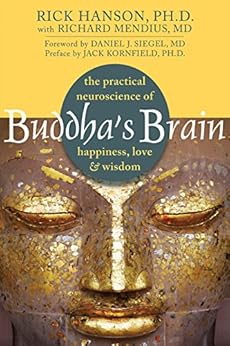
As a mental health patient, I think it's nice when my therapist does something that shows me she is thinking of my treatment even when I'm not around. My latest therapist, whom I have been seeing for a few months, came in with a treat for me last week, proving she's "on the case." She told me that she started reading a book that made her think of me, so she brought it in for me to read myself. That book was Buddha's Brain: The Practical Neuroscience of Happiness, Love, and Wisdom by Rick Hanson, Ph.D. with Richard Mendius, M.D.

Buddha's Brain delves into the neuroscience behind stress, anxiety and depression while focusing on the effect meditative practice has on the brain. The book is peppered with Buddhist quotes and some background on Buddhism itself, but don't be fooled. This is not a religious book. It does touch on spirituality, but the topic appears to come up mainly because spiritual matters can have a profound effect on your mental health. Buddha and Buddhism come up because Buddhist meditation is a proven method of relieving stress and anxiety while increasing your overall sense of well-being.

Instead of giving you a review of Buddha's Brain, I'm going to tell you what it has to offer for us anxious and/or depressed folks. I found a lot of classic DBT and CBT methods mentioned in the book that veteran patients will hopefully recognize, such as mindfulness and the benefits of gratitude. I also found some valuable insights into dealing with painful memories, making meditation more approachable, nurturing positive relationships and so on. In short, both people who have sought help for years and people first reaching out for help will find this book useful in their treatment and life in general. 

What made my therapist think of me when she was reading Buddha's Brain was the neuroscience component. She knows I prefer science to spirituality (not that you can't have both). Hanson provides pages of references for the assertions he makes regarding brain chemistry, memory storage, etc. You know he's not just spouting the latest feel-good self-help tropes, which I know a lot of you will appreciate. 

Buddha's Brain provides everything you need to start or supplement a meditation practice. If you don't want to meditate, it can help you learn how to guide your thoughts so you can cultivate the wisdom that you want in your life, strengthening those thoughts and hopefully weakening the hold negative thoughts have on you. It's not a magic cure for what ails you spiritually and mentally, but rather a tool in the mental health toolbox you should always be expanding. 

If you have any book suggestions you think I should check out, please let me know in the comments section. 

Monday, July 18, 2016

Facts About Anxiety, OCD and "Living in the Moment"

In anxiety treatment and some spiritual philosophies, being able to be "in the moment" is a lofty achievement. It is said, and is often proven, to lead to a greater sense of well-being and ability to handle tremendous feelings. I thought I'd share a few things about this elusive practice of being in the moment with whoever is reading this. Sometimes, I find it helpful and, of course, want everyone living with anxiety to have as much help as possible.

1. The Moment is the Only Thing That is Real


Before you run away thinking I'm about to get pseudo-philosophical on you, think about it for a moment. We rarely remember the past exactly as it was, and it's gone anyway. Sure, it happened, but it's not happening right now. The future is not certain for anyone. You can plan, and should to some degree, but you can't know what will happen, so unless you're creating safety nets, setting realistic goals or planning fun outings, your ruminations about the future might be unhealthy. You could be imagining catastrophe after catastrophe for no reason! Remind yourself, none of that is real and bring yourself back to what is happening RIGHT NOW. You'll fail at that sometimes. It's much easier to do when the moment is enjoyable.


2. Sometimes the Moment Sucks


Well, if the moment is the only thing we can really trust, what do you do if the moment sucks? Well, there are two things that you can do. Firstly, you can accept that the moment sucks. Yep. Shit happens and it's going to happen to you. However, you can also realize that moments are impermanent. If you're an anxious person, you feel intense emotions that you just want to pass. They always do, in spite of our fears. In these moments, it helps to remember that it will stop, even if it takes a while.


3. You Don't Have to Meditate to Be in the Moment


Meditation is a helpful way to learn to let thoughts come and go. It helps you to focus on breathing and get comfortable with being uncomfortable. However, you do not have to do it to be in the moment. You can be in the moment any time, anywhere. You can focus on the sound of leaves crunching under your feet on a hike, relish the wind in your hair as your rake your yard or breathe in the scent of a loved one during a hug. All of these things and many more center you in the here and now. You don't need 100 scented candles, a special butt pillow, an altar to the old gods and the new or a mandala drapery hanging ten feet high in front of you. You just need a moment in which to be.


4. It's Not Possible to Always Be in the Moment


Don't let trying to live in the moment be another reason to bully yourself. Not living in the moment is not failure. In fact, sometimes you have to take yourself out of the moment and imagine possible future scenarios. Sometimes, you'll really want to think about the past so you can see a loved one again. That's fine. It doesn't matter. Just practice being in the moment when you can so you can use that skill when you really need a break from your fear.
 

 5. Physical Stimuli Help Me


Everyone has different tricks. For me, and for many others, physical cues can bring me into the moment. Running my hands under cold water, taking a shower, holding an ice cube, standing in the wind, hugging a loved one, etc. These can bring me back. Sometimes, it is only very fleeting and I get right back into ruminating, but I can always grab another hug or sit outside in the cool wind a little longer.

If you're having trouble with ruminating and accepting feelings or just want to be a little less stressed, look into mindfulness meditation or just mindfulness in general. Like all tools for mental health, it has different levels of success for everyone, but it takes very little energy to learn and try.

If you have any mindfulness tricks you want to share, please feel free to do so in the comments section.


Friday, July 8, 2016

Responsibility Anxiety

As I've mentioned before, anxiety has themes. One of the themes that comes up a lot for me is responsibility. Being responsible for another person's health or happiness stresses me out . . . a lot. Like other anxieties, it waxes and wanes. Some days, I can watch five kids and a dog for four hours and be perfectly fine. Other days, the mere thought of having to pour someone the right cereal to milk ratio in a bowl is enough to bring me to the verge of panic. So, I thought I'd talk about it.

Anxiety about responsibility presents a lot of problems in my life. I'm responsible for the cooking and cleaning in my house, for the most part, which can make me anxious. Some days, I have to scrub the entire house clean just to feel like I'm on top of things. I'm also a full time writer/blogger/author. I get twinges of anxiety all the time about deadlines, meeting clients' expectations and making enough money to pull my own weight. I very rarely have problems in any of these areas, but anxiety doesn't care. It even makes me go back and forth on whether I want kids because, you know, I'll be responsible for them.

I suspect my fear of being the cause of anyone's pain, hunger, displeasure, etc. fuels this anxiety and OCD theme. I also suspect it's behind a lot more of my anxiety than I notice. This knowledge doesn't change anything for me. I didn't all of a sudden realize it and come up with a plan to stop it. I'm not going to shirk responsibilities. Besides, another theme would just pop up. I think I'm just going to keep doing the things I'm responsible for and giving the anxiety that comes with it the finger. Oh, you think I'm going to disappoint everyone, anxiety? Well, I just might and see how you like that.


Tuesday, May 17, 2016

I Neglect My Friends

This is my best friend
I don't neglect her. I should though.
With few exceptions, I am a very neglectful friend when it comes to my presence. Sure, I send congratulations when due. I send out Christmas cards. I frequently comment on social media posts. I'm truly interested in what my pals are up to. I just don't hang out with them in person very often. Like, maybe once a year. I know. It's neglectful, but I have my reasons.

I'm painfully aware of the kind of person I used to be. I have the same personality as that person, but much less adventurous spirit. I used to spend all of my money on trips, parties, concerts and random cool crap I liked. I was down to hang out with my buddies any time we could all get together. They're fun and funny people, so why not? When they would say, "Hey, let's go do this thing." I would say yes, rarely with any hesitation. It always landed in me in the presence of warm, sarcastic, loud, funny people. Of course, I want to go.

Now, I can't say yes. Now, I'm rarely comfortable in groups. Now, if I haven't seen someone in a while, I am instantly anxious at the thought of seeing them. Not because they make me nervous, but because it's different. When my routine changes too much, I sometimes get physically ill. What's worse, I feel horribly guilty when I flake. Part of me feels like people can't possibly want to hang out with the nervous nutcase. Another part of me realizes that I'm actually disappointing people when I'm not around. Either way, you can't really win. You're just anxious.

Here's the thing, though. Anxiety is my companion whether I avoid things or not. I'm anxious even when I have routine, though it's not as pronounced, and the possibility of freaking out in front of people who barely see you anymore is eliminated when I stay home. The fact that I've never actually "freaked out" is beside the point. No one even notices I have anxiety, but I'm afraid they will, and then I'll have to talk about it. I'll have to tell them, and they'll assume I'm crazy, faking, dramatic, etc. Mental illness is so often misunderstood by the world, and the last people I want to misunderstand me are people I love. So, I neglect them instead.

Monday, May 2, 2016

Pieces of Mind or Shit My Therapist Says

Anyone who goes to therapy starts to pick up on these counselorisms (I hesitate to call them therapisms because of the way that word breaks down) that people in mental health fields seem to have. Some are unique to the counselor while others happen across the board. I noticed one recently that I realized I have been hearing for years. It's not exclusively shit my therapist says because I've heard other therapists say it. You may have heard it. It goes something like "There's that acceptance piece."

Therapists love to break your mental issues into pieces. They search for missing pieces to the puzzle that is your problem. They point out when you find pieces they have been searching for. Sometimes, I think they just throw an exclamation about a piece out there so it feels like you've hit on something big. "There's that tolerance piece, Michelle. Bravo, dude!" I've heard it so much I even catch myself saying it. "Here I am, stumbling around in a miasma of panic searching for that chill the fuck out piece."

I have some really great people backing me up in my OCD and panic disorder struggles. I think they really want to help me, so I poke fun at the language knowing it's just that therapist piece. They all get similar training, read similar books and come out with similar vocabularies.

Saturday, April 23, 2016

I'm an Anxious Yogi and You Can Be Too!

This pose is easier than it looks.
Yoga. You've probably heard a therapist mention it before. You've definitely heard of mindfulness, meditation and other elements of yoga in the mental health world if you've been part of it for more than a minute. It's one of the many tools you can keep in your toolbox for fighting OCD and mental illness in general. If you're not trying it or practicing it already, I urge you to try. I find it helps, and you might too.

You may already be thinking one of the following things:
  • I'm not flexible enough for yoga.
  • I'm not the right age for yoga.
  • I'm not the right religion for yoga.
Everyone is flexible enough for yoga. Everyone. Yoga is not about achieving acrobatic feats of flexibility. Sitting in a cross-legged position is yoga. Hell, even lying on the floor on your back with your palms facing up is yoga. Which brings me to age. This is not a barrier for yoga. Elderly folks and toddlers do yoga. Finally, yoga can be completely secular. It's up to the yogi whether they want to do things like chant, seek spiritual guidance, etc. Me? I just hit the mat with my tight muscles. I'll leave the chanting and spiritual awakening to more enlightened folk.

So, we've established that most of the barriers people put up with yoga are bullshit. I should also add that you definitely have enough time to practice. There are no rules. You can do yoga for five minutes twice a week. No one cares. This is your practice.

I know you can. You know you can. Let's move on to why you should.
  • Mindfulness
  • Goals
  • Self-satisfaction
  • Pain relief
  • Party tricks

The above are really just a few of the benefits I've reaped from practicing yoga. We learn mindfulness to keep us in every moment. As mentally ill folk, we need that. Yoga is all about being in the moment, in your body, in your mind, pushing yourself gently, and being forgiving of yourself. Setting goals helps us have something to work for, which leads to being satisfied when we achieve those goals. Stretching helps relieve tension. For me, it relieves pressure on my sciatic nerve. Finally, some yoga poses that are easy look really hard. You'll have some bragging rights when you nail them, but you'll also be fine if you don't.

I'm a very anxious person. There are days when I'm so wobbly I can't even do basic yoga poses. However, there are also days when I can hold up my body weight in balance poses I never would have dreamed possible. On those days, yoga focuses my mind and body. I'm anxious. I have OCD. I'm in my thirties. I have a hundred reasons not to do yoga, but I do it anyway. It's good for me. It can be good for you too.


Wednesday, April 13, 2016

A Letter to My Future Anxious Self

Today, I came down with a painful infection–something that is fairly frequent for me, but that I never get used to. The pain was enough to rock me back on my heels and put a stop to a month free of panic attacks. I got through it, but I wanted to write a letter to my anxious self because I can.

Dear Shelly,

Today I had a panic attack. It was a real rocker. You know the type. I sweated, felt like I would puke, worried I would kill myself, worried I would hurt someone else, worried about work, worried it would never end–all in the span of 20 minutes. It wasn't fun. It sucked. I know it sucks. I know it's hard, but I want you to know you do not understand anything right now. Your thoughts are lies anxiety tells you. Even when there is some truth, it is always a catastrophic version of what might be. Sure, the shit might hit the fan, but you cannot predict the future.

I know you're hurting right now. You might feel like you're not good enough. If you're in pain from another infection, you might think that will never end. You have a lot of fears. I'm sorry you have to go through that. It makes me sad to think of you going through this anxiety, whether it's for a few minutes or a few months. I love you, though. We've done all of this before. I know all the thoughts you have, and I love you! You should know that.

I also want to address some of the things you might be thinking. I know you overthink shit big time. I'm not sure addressing your fears will help, but we try everything else, why not this?

1. The moment you need your meds to get calm, you are going to start thinking you're an addict. It's what you do. Even if you think "I haven't had them in forever. I don't crave them." you will follow it up with "Yeah, but this could be the time." Listen honey, this is the thought you have every time. Remember when you couldn't sleep with your medication near you? You have anxiety about medicine, kid. So what if this is the time? Are you struggling with anxiety right now? Take care of yourself with the tools you have. Let me take care of what's left of you when you're done. I can handle it. I swear. I'm waaay stronger than you think I am.

2. You're going to think the anxiety is going to hit its stride and never go away or stick around long enough to fuck up your work. The first is impossible. The second is rare, but it could happen. So what? The reputation you think you need you're imagining. Even if all of your clients cut you off because you were out of work for a month, you would bounce back up, but I'm not here to reassure you. I'm here to tell it like it is. This shit will happen to you. You are sick. You're also fine.

3. You're going to worry about committing suicide because you have intrusive thoughts about it. I'm not going to bother telling you they are just intrusive thoughts. I know what it feels like. You wouldn't listen to me anyway. I will say this, though. I really want a chance to come back to my life. I would appreciate it if you would take care of us and just endure this until you get back to me, okay? If you have to cling to a book for a month drinking Ensure and playing video games with Adrian, do it please. I need you. No pressure, though, eh?

4. You're going to worry about puking. I'm baffled that we're so scared of being sick, but it happens. So what if you puke? So what if you puke up your meds? Make sure they're whole when they come out so you know which ones you can take again, which brings me to . . .

5. You're going to worry that your meds will stop working. I know why you worry about this. Sometimes, our meds are not as effective as they can be. It's because sometimes we have really prominent symptoms. Here's the thing, a pain pill may not completely knock out UTI pain. An Ativan may not knock a panic attack on its ass (though one just did). They will help make your anxiety manageable enough that you can knock back an Ensure, read a book and walk until you find me again. It might take time, Shell, but you will find me. I promise. It's okay to cry and be sad that I'm gone right now.

6. Do what you would have done anyway. If you sit still and cater to the horrible sensations of your anxiety, it is all you will feel. You might as well feel like shit and do something at the same time. You might enjoy the walk less or zone out during family time, but at least you won't just be sitting there feeling like shit, right? Live your life. When it's going rough, it's going to suck whether you lay around like an invalid or get up and risk puking in the grocery store, which still has yet to happen. I can just imagine us if it ever does. "OMG, I was right!" Ugh. Whatever.

My point is, get through it. Do what you have to do. I promise you that I, your calm self, will be happily waiting for you on the other side. I always am. Even if it's just for a minute that slowly grows over time to be hours, I am always waiting for anxious me to get to the other side of anxiety. This is not reassurance. This is just a fact. I can't wait to see you again. It feels so good to be alive. I can't wait to tell you that.

Love, Shelly

Monday, March 14, 2016

My Anxiety's Relationship WIth Sleep

This has nothing to do with
my anxiety, but I thought it was funny.
 
When you have an anxiety disorder, you more than likely have sleep problems to go along with it. The two don't always go hand in hand, but most people who suffer from anxiety seem to have trouble sleeping at some point or another. This trouble can take various forms and has had many faces in my life–not all negative, believe it or not. Here are a few troubles I've had with sleep and that you may have if you suffer from anxiety:

  • Difficulty falling asleep
  • Difficulty staying asleep
  • Difficulty falling back to sleep
  • Difficulty waking up
  • Difficulty staying awake
  • Difficulty trusting the efficacy of your sleep medication

Okay, that last one isn't really anxiety related as much as it is related to my dismay that medication is not magic. 

Anxiety is the antithesis of sleep. Check out this study abstract if you don't believe me. If you are worrying or having physical anxiety symptoms when you lay down at night, you are not likely to fall asleep fast or have restful sleep. I have spent hours laying in bed worry about life, worrying about worry, having panic attacks or stressing about sleep while trying to fall asleep. I know I'm not alone in this, though I never saw anyone else pacing the halls or asking the nurse for anxiety meds at 3 a.m. when I was in the hospital. I suspect they were giving everyone else better meds.

Trouble staying asleep and falling back to sleep is something I experienced mildly in the past. However, it came about full force at the end of last year. I was waking up multiple times a night with panic attacks and having trouble getting back to sleep. This was different from waking up a bit early and laying there hoping for more sleep. It was a desperate clawing need for sleep coupled with panic symptoms that prevented it from happening. The meds that helped me fall asleep did nothing to help me stay asleep. It's been about three weeks since this has happened after a period of it happening every night, so you could say I'm pretty excited.

It is much more common for me to have issues with sleep than it is for me to sleep too much or feel sleepy enough for a nap, but it happens. It typically happens when I'm a bit depressed, but don't have the underlying anxiety that usually triggers it. It also happens when I'm on psych meds for my conditions, and they are working. I think I've decided it's better to sleep too much than too little, so I'm going to be super med compliant this time . . . I promise.

I mentioned at the beginning of this post that not all affects of my sleep problems are negative. It's true. I'm typically a night owl, so much so that I may stay up until 5 a.m. and sleep until noon. When I go through a bout of strong anxiety, I tend to get up earlier–a reset that usually lasts a few months after the relapse has resolved. I also tend to get fewer bouts of profound sleepiness in the middle of the day, which is nice. My relationship with sleep may be strained at these times, but I am really productive when I start to come out of the anxiety with a "normal" sleep pattern. It's never long before I'm cleaning the house late at night and reading until the sun comes up again, though.

If you suffer from anxiety and have a hard time sleeping, open up to your docs about it. They say sleep is one of the most important things you can do for your mental health, so seek ways to have a healthier relationship with sleep. Good luck!


Wednesday, February 3, 2016

Fear of Addiction: One of My Many Intrusive Thoughts

That's me, doing my advocate thing.
Today, I progressed in my exposure and response prevention therapy to one of my harder "triggers," and that is thoughts that I will become addicted to my anxiety medication. There are a few things that make this particular exposure tricky. Firstly, I am on medication that is potentially addictive. Secondly, I have days when my anxiety is too great to function without medication. I have this trigger in my life that I currently depend on, but am afraid to become truly dependent on. This is a field day for my obsessive mind.

I'm not going to go into medication details for now. I know I'm not the only one with medicine obsessions, so I don't want people to equate my experience with my particular cocktail as everyone's experience. This stuff is too nuanced for that. What I will say is that I am on a low dose of my particular medication, but I take it everyday right now because I was on a higher dose in the hospital and we want to make my transition to taking it rarely again super smooth. At times, I know I'm doing well with the taper and I am not abusing my medication. Other times, I'm convinced I'm addicted and I don't even know it. It's been enough to cause bad enough panic attacks that I need my meds, which I'm sure you can imagine fans the flames.

I've been questioning my relationship with my medication for years. Even when, as a person with co-morbid and relatively severe panic disorder and OCD, I was taking a low dose maybe once a month, I would sometimes convince myself I was addicted. Suddenly, my panic symptoms must be symptoms of withdrawal, my need to make the panic stop really just a need for medication. Never mind that my panic exists with or without the medication. It's just where my mind goes. Now, I'm trying to face that fear and live with that doubt. It's not pleasant.

This is probably my most uncomfortable exposure yet. I think that is a good thing. It might finally be working.

Friday, January 29, 2016

Eating When Anxiety Leaves You With No Appetite

Land Rover MENA
Many of my loved ones would probably tell you that the only visible sign of my illness (apart from occasional trembling and crying) is weight loss. When I have a spike in my anxiety that lasts a few months, I invariably lose between 20 and 40 pounds. Without the proper care, I would easily lose much more. Anxious people who have stomach symptoms know that sometimes eating is next to impossible. Keeping the food down is another challenge altogether. Here are some tips I've found help me stay relatively healthy when my anxiety doesn't want me to eat.

Medications

Depending on the level of your anxiety, your feelings on medication and your plan with your health care providers, you may include medication in your plan to stay nourished through your anxious periods. Medications that help me include anti-anxiety meds and anti-emetics. Luckily, anti-anxiety meds can have some anti-emetic effects as well, so I often only need those to get enough of a handle on my stomach to get something, if not much, down and keep it there.

Food

Sometimes, there is no food that is going to go down. Swallowing anything that isn't liquid feels like eating concrete that makes you cry. (Yes, I've been brought to tears in my attempts to eat. I'm sorry if you have this experience too.) The answer when this happens is Ensure Plus. Ensure Plus has nearly 400 calories, so it can easily count as a meal. Just a few ounces and you've got some great nutrition and enough calories for a few hours. I swear by this stuff.

Accessible, nutritious foods are best when it comes to solid food. You don't want to rely on anything that needs a lot of cooking for two reasons. Firstly, you may be too anxious to cook. Secondly, you might lose your appetite by the time the food is cooked. Keep items like low-fat cheese, sandwich meats, pasta salads with vegetables, tuna salad, boiled eggs, hot cereal, cold cereal and low-fat bran muffins on hand. Make sure everything you eat has serious nutritional value in at least one of the food groups. Make sure you can grab it and eat it the moment you have an appetite. Use these rules for your anxiety food and you should be able to get the minimal calories and nutrition at least.

Obviously, keep some food you can cook on hand for when you're feeling well. Try to keep away from fast foods because you don't want your intake to be full of saturated fats and sodium. Snack a little throughout the day if a big meal doesn't feel good on your stomach. In short, the bottom line is to eat food that is as comfortable as possible and understand your alternatives if you are having trouble holding down food.

Good luck to you or anyone you know who is suffering this unfortunate side effect of anxiety. If you have any additional tips, feel free to comment below.

Friday, January 15, 2016

Parenting and Anxiety

Anxiety is a very difficult ailment to cope with. Various everyday things have an effect on people with anxiety that people who do not suffer from anxiety can scarcely imagine. Just catching a cold or missing a train can send anxiety through the roof. Becoming or being a parent is a huge aspect of a person's life. It is much more of a big deal than a cold or missing the train. Therefore, it can have a big impact on a person's anxiety level, both good and bad.

Being a parent is not necessarily a bad thing for a person who has anxiety. Having something to do to take your mind off your worry or the physical symptoms of anxiety is a great release and children are a wonderful distraction. Furthermore, being around a person that you love is a soothing balm to overstretched nerves. In this way, being a parent can help ease your anxiety. Spending time with your child can be the best medicine in the world for you. All of those happy, cherished moments make a big difference to your mindset.

On the other hand, there are a lot of stressors that come with being a parent. Are you feeding your child what he or she needs? Is his room clean? Are her teeth brushed? Is she safe over her friend's house? When is his next game, doctor's appointment, dentist appointment, school function, friend's birthday party? You want to keep on top of these things effortlessly, but you worry that you will miss something important. It is tough. All parents feel this way, but when you have anxiety, it is harder to maintain because you have physical and emotional symptoms of your disorder to deal with on top of everything else. The upside to this is that your anxiety motivates you. You cannot stop worrying about it, so you will get it done.

Another way that being a parent can affect anxiety is to drive you to seek treatment or coping mechanisms for it. You want to learn to deal with your anxiety better so you can be more at ease as a parent. This is a great thing. Learn coping mechanisms to help you get through your busy day. Do not be afraid to talk to your child about it, either, once he or she is old enough. Make sure she knows what the symptoms are and that you will be just fine as soon as they go away. Try to act as if it is a normal thing–because it is.