I knew it was coming. K, my therapist, is moving on to greener pastures. We've been working on my bullsh*t together for about three years now. She's helped me through getting married, two relapses of OCD-related anxiety and depression, countless family dramas and learning how to love myself. I'm still working on most of that, but I'm still alive, so she did her job. She did it well and I really like her, so I'm understandably sad that she is going. However, I'm very happy for her and maybe a little bit hopeful that change isn't so bad. If your therapist up and leaves you for something better or just because they change offices like I change med schedules, you can do what I'm doing–at your own peril.
1. Pretend it's totally cool. Say things like "That's awesome." "I'll be fine." and "Don't worry about it."
2. Go about your scheduled therapy like nothing is different. Talk about your family, your job and your "homework" like you would any other day. Change the subject when it comes to the impending breakup.
3. Acknowledge the fact that not only has your therapy buddy decided to move on, you have to find a new therapist.
4. Panic.
5. Cry.
6. Frantically research therapists in the area in case the other ones at your soon-to-be estranged therapist's office are d*ckwads or flakes.
7. Continue to go to therapy and act like nothing is wrong. "Who me? Worry that the therapist who talked me through a wedding when I couldn't leave my house without panicking a year earlier and who called the doctors when I stupidly checked into an in-patient facility and explained that I'm not an addict or a psychopath, so give me my meds and then let me go home is not going to be calling me on my sh*t anymore? That doesn't sound like me. I'm fine."
8. Pull up your big girl panties and seriously talk about the next move, meaning finding a new therapist.
9. Find new therapist.
10. Try to find fault with new therapist whom you have yet to meet.
11. Resign yourself to new therapist.
12. Say goodbye to old therapist while crying and telling her to keep in touch with you, as if that is an ethical move on her part. "What do you mean boundaries?!"
13. Meet new therapist.
14. Chill because new therapist is cool.
15. Cry all the way home because old therapist was cool too.
. . . and that's all I have so far. I'll give you the other 20 steps once I've completed and identified them. Good luck on your journeys from therapist to therapist. I know we all do it and some point or another.
Showing posts with label Counseling. Show all posts
Showing posts with label Counseling. Show all posts
Wednesday, March 16, 2016

Friday, December 18, 2015
Why Do We Have Low Self-Esteem?
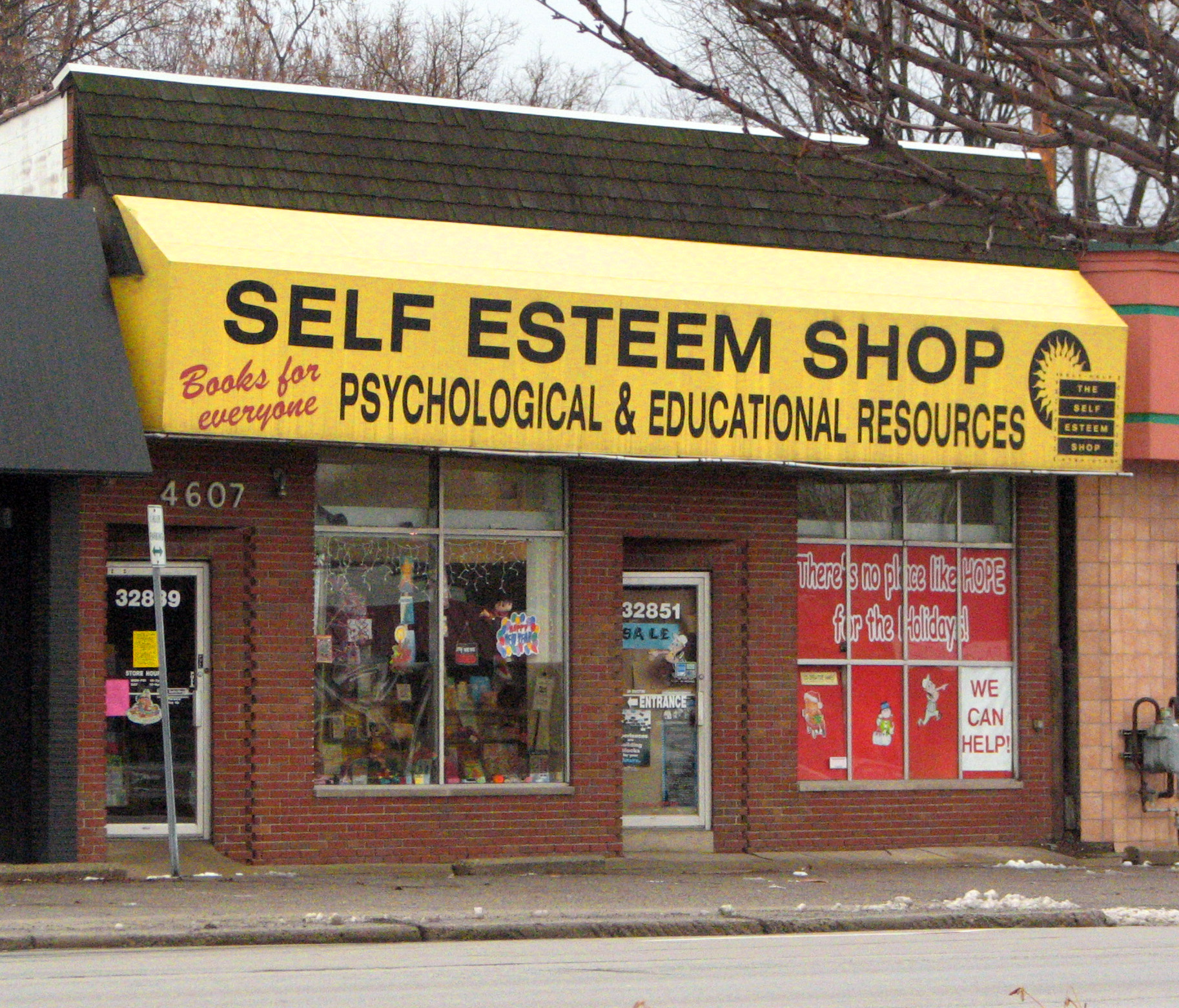 |
| Wait? You can buy self esteem?! Courtesy of Dave Hogg |
Low self-esteem is a feeling that you're worthless, insignificant and/or not as good as other people. You may feel like your body is not attractive or as attractive as other people's bodies. You may feel like you are intellectually stunted, unfit, etc. In short, a person with low self-esteem feels inferior to other people. This is a very difficult feeling. It can interfere with your level of energy, employment, relationships and many other things. It leaves you vulnerable to people who want to take advantage of you. If you have low self-esteem, you know the negative effects it can have on your life, but what causes it? How do people come to feel so badly about themselves?
A negative opinion of one's self can come from many different things. It can begin during a person's formative years. If a child's parents, family or classmates are mean to him about his appearance, intellectual capacity or any other aspect of his self, he may grow up to share their opinions. Growing up hearing, "You're ugly." "You're fat." or "You're stupid." on a regular basis can cause you to think everyone feels that way about you. You may become afraid to make friends, have relationships or even apply for a job because you assume that no one would want you for anything because you are what those cruel people said about you.
Low self-esteem can arise later in life too. For example, when a person begins having romantic relationships, they can develop a habit of looking down on themselves. One mentally abusive relationship is enough to make a person go from confident to self-loathing. An emotionally abusive person typically employs a slew of insults to control their significant other. After time, you can start to believe those insults are true. This is not very different from having emotionally abusive parents or being bullied in school.
Body image-related low self-esteem does not always come from insults. People are sometimes born looking different from others or an accident dramatically alters their appearance. Sure, this can lead to insults. However, low self-esteem can come from simply looking in the mirror and at other people. It is a rare person who feels comfortable when they look very different from others. A person may also look to the media to get their idea of what they should look like. This can lead to ideas that they have to be overly fit, dangerously skinny, tiny-nosed, perfectly made up, have brilliant hair, etc. Unfortunately, low self-esteem that comes from feeling like this can lead to far worse problems, such as eating disorders.
Finally, we of the mentally ill sort know that low self-esteem doesn't always have an outward cause. It can come from deep within, boiling up from the miasma of depression and anxiety. When this abysmal sense of self worth is coupled with the other low thoughts that come from mental illness, hopelessness is not far behind. However, there's "good news, everyone!" Mental health counselors can work on this with their clients. It's not a quick fix, but you will learn to treat yourself better and not rely so heavily on other people's opinions. Yeah, I'm still working on this.
Surround yourself with positive people. Try to be a positive person. Eventually, your mind will follow suit.
Monday, November 30, 2015
Can Counseling Help People With Anxiety Disorders?
.jpg "Woman fleeing in woods") |
| Arthur Rackham for Undine |
For counseling to help with any kind of anxiety disorder, the sufferer has to be willing to try to make it work. If a counselor suggests something like exposure therapy, the sufferer has to trust their counselor and try not to let their fear get in the way of treatment. Oftentimes, counseling will fail in treating panic disorders because the sufferer can't or won't allow their counselor to help them.
In order for a counselor to help a panic disorder sufferer, it is best if the counselor is well suited to the counseled. If there is anything about the counselor that makes the sufferer uncomfortable or defensive, it will be difficult to get results. On the other hand, it does take time for a person to become comfortable with and begin trusting their counselor. Therefore, if you are just starting counseling, give it a while before you switch counselors. You may find that as you get to know your counselor, your treatment works better and better.
The intensity of the anxiety disorder will also have a lot to do with how well and how fast counseling will help. For example, if a sufferer cannot leave their house without having a panic attack, going to counseling is going to be hell for them. It will be awhile before that person is able to feel safe going to see their counselor. Furthermore, it is harder to break the cycle of a panic disorder when it has been festering for a long time and has had the chance to become severe. Panic attacks become like a habit for many people. Sufferers get so used to them that they expect to have one and subsequently do because of their negative thinking. Counseling can and does help people like this, but it takes patience on the part of both the counselor and counseled.
A good counselor will have great listening skills, be understanding and have a comprehensive knowledge of ways to treat panic without medicine (see a prescriber or psychiatrist for that). They may tell you to try to get regular exercise, eat healthy foods, try exposure therapy, keep a journal, etc. All of these things are small steps on the road to chipping away at panic disorders. However, with the right counselor, right advice and enough time, a sufferer cannot only lessen their panic, but they may see it go away altogether.
The intensity of the anxiety disorder will also have a lot to do with how well and how fast counseling will help. For example, if a sufferer cannot leave their house without having a panic attack, going to counseling is going to be hell for them. It will be awhile before that person is able to feel safe going to see their counselor. Furthermore, it is harder to break the cycle of a panic disorder when it has been festering for a long time and has had the chance to become severe. Panic attacks become like a habit for many people. Sufferers get so used to them that they expect to have one and subsequently do because of their negative thinking. Counseling can and does help people like this, but it takes patience on the part of both the counselor and counseled.
A good counselor will have great listening skills, be understanding and have a comprehensive knowledge of ways to treat panic without medicine (see a prescriber or psychiatrist for that). They may tell you to try to get regular exercise, eat healthy foods, try exposure therapy, keep a journal, etc. All of these things are small steps on the road to chipping away at panic disorders. However, with the right counselor, right advice and enough time, a sufferer cannot only lessen their panic, but they may see it go away altogether.
Subscribe to:
Posts (Atom)